
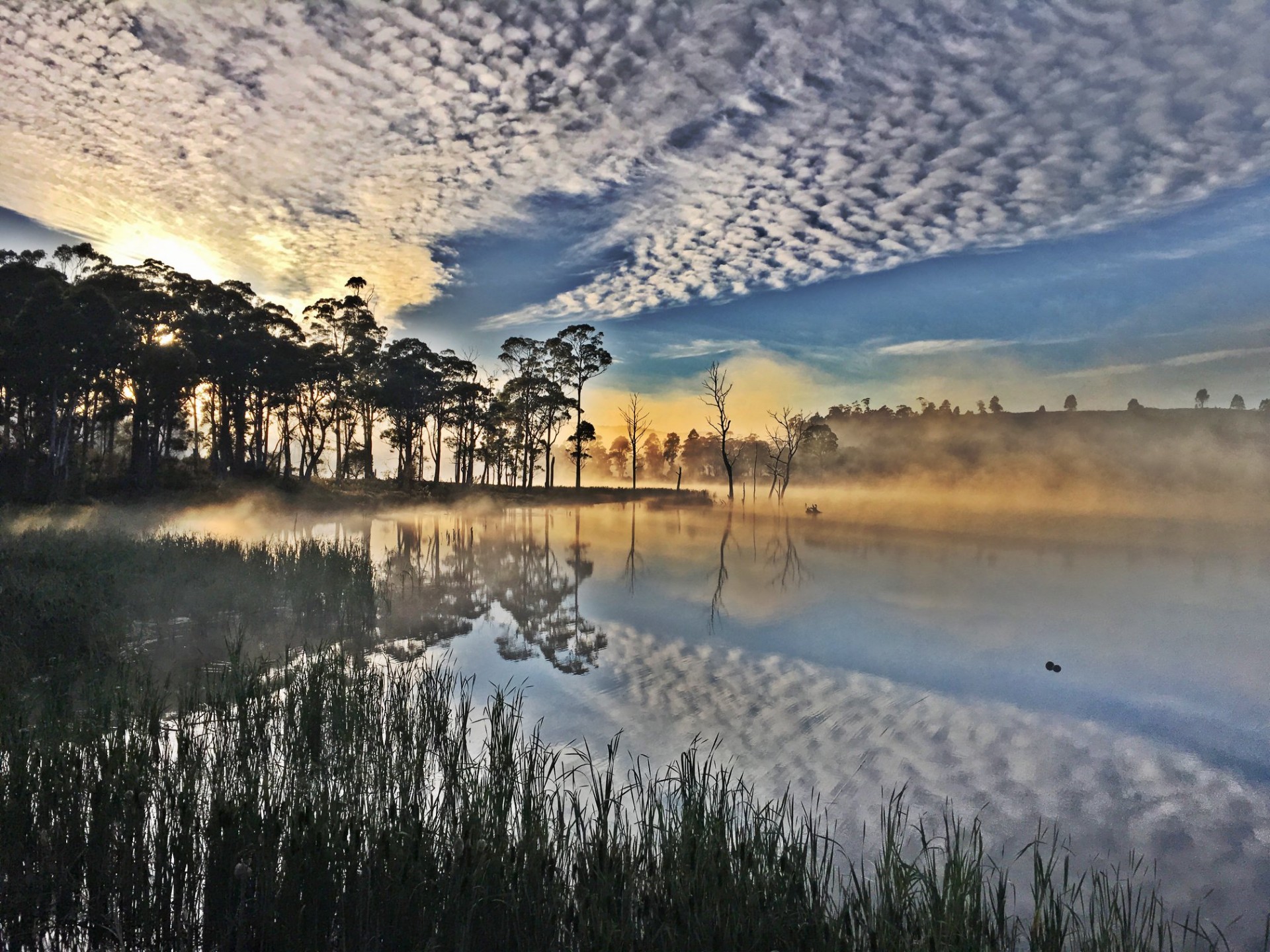
Trout fishing, East Coast Highlands, Tasmania
Currawong Lakes
Wild brown and rainbow trout on a private 2,000 acre estate, with only a handful of guests on the water at any time.
Tasmania’s fly fishing retreat, started as a trout fishery
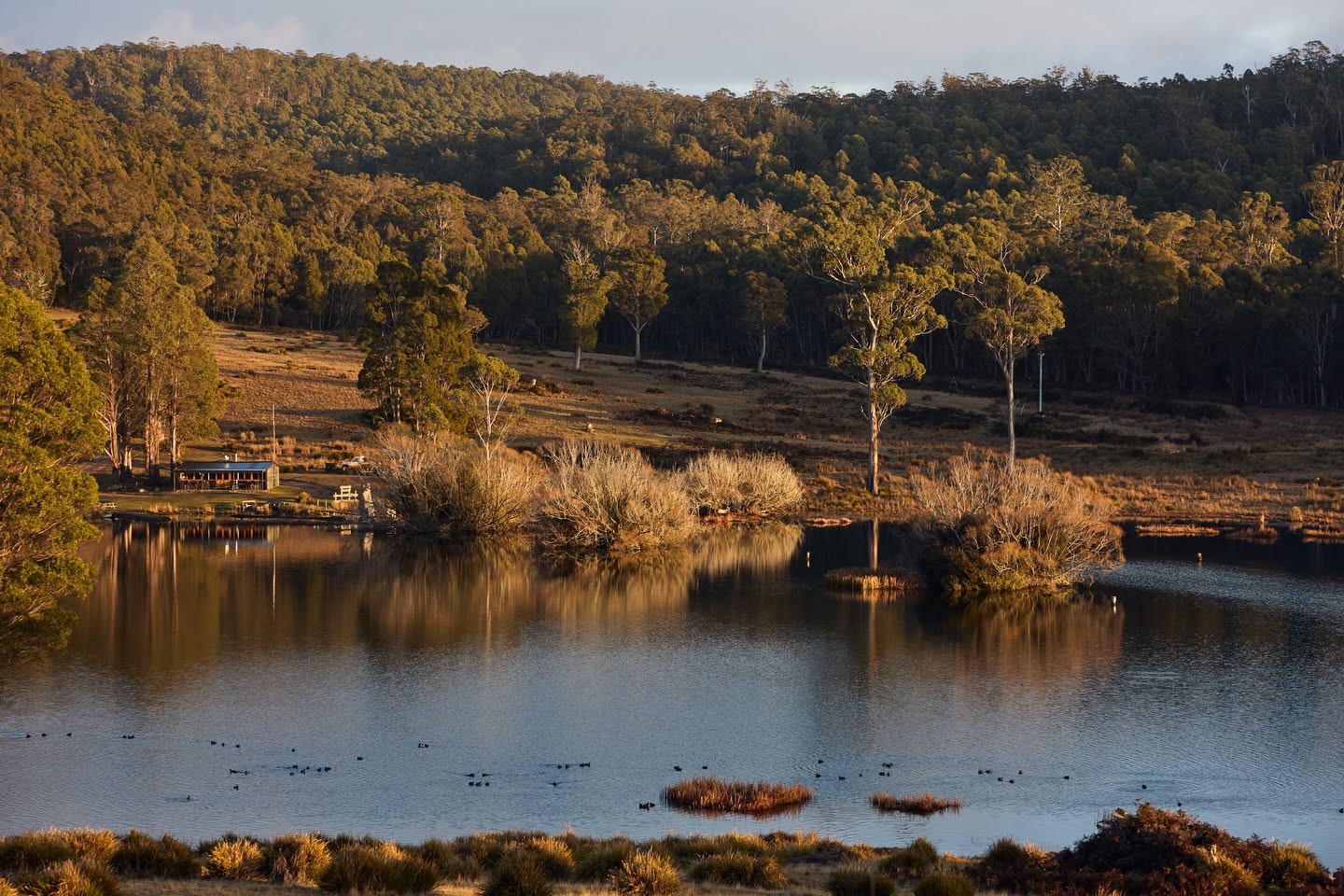
Currawong Lakes began life as a trout fishery. Years of hard work turned it into one of the best places in Australia to fish a dry fly. It is run as an exclusive private estate of 2,000 acres, surrounded by State Forest in the East Coast Highlands, and guest numbers are kept low so the lakes stay quiet and the experience stays private.
It suits anglers at every level. If you have fished for years, the hatches and the size of the fish will keep you busy. If you are new to a fly rod, there is an in house guide, gear to hire and water where you can practise without anyone watching.
The fishing
“Second cast, the water erupted. A thumping fish, six or seven pounds, in the middle of a red spinner hatch that went on for hours.”
These fish live like wild fish. They are naturally fed, fat and fight hard. The population is carefully managed so there is a healthy spread of sizes, from an average of two and a half to three pounds right up to trophy fish. Much of the fishing is sight fishing: cruising fish on ripple lines, tailing fish in the shallows and rising fish in the evening.
The in house guide knows what the fish and the insects are doing each day, which patterns to tie on and how to get them in front of a fish. If you need help with your casting, you will get it. Fly fishing only improves with a rod in your hand, and this is a place built for that.
The Currawong year
The lodge is open all year, and each part of the season has its own hatch and its own way of fishing. Use this as a rough guide; Tasmanian weather moves things around.
The red spinner usually starts in the last two weeks of October.
Midges and cruising fish
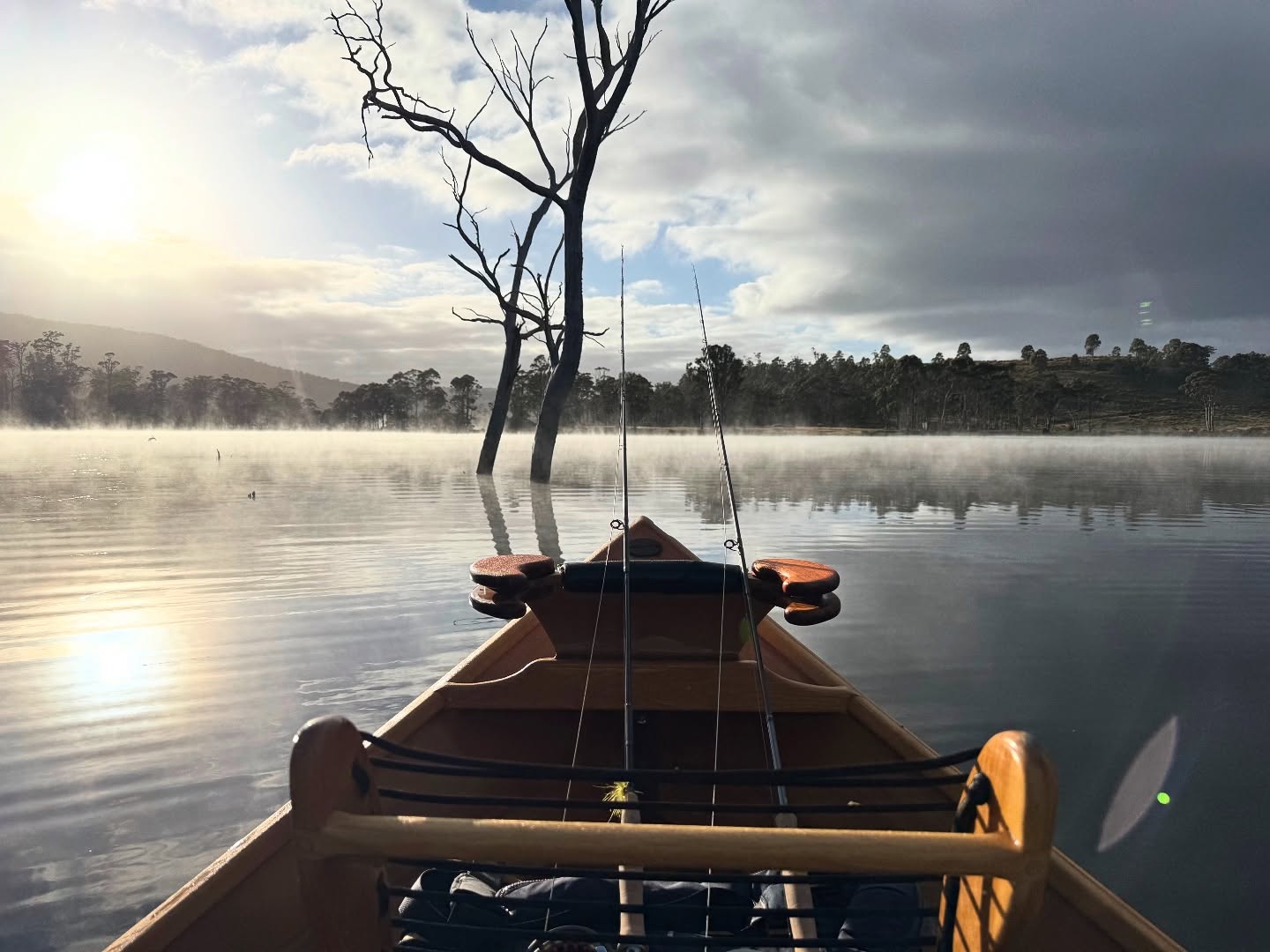
This is the season of the chironomid. Browns and rainbows cruise the ripple lines on the lee shores, feeding on midge pupae and adults. From late July you can cast to moving fish on most days, at a time when most other fisheries are closed or at the mercy of the Roaring Forties.
Evenings bring some of the most exciting dry fly fishing of the year: a big brown taking the smallest fly on the lightest tippet you will use all season, in the dark. As the water warms in late spring, trout push into the shallows after scuds and stick caddis, and tailing fish show up morning and evening.
What to tie on
- Small black nymph or green pupa, cast to moving fish
- Small dries in the evening, such as a Greenwell’s or Griffith’s Gnat, size 16 or smaller
- Nymphs and small wet flies, static or slow retrieve, for tailing fish
The red spinner and the evening rise
From the last two weeks of October the red spinner is on the wing around every lake margin. Around nine in the morning fish start nymphing in about four feet of water, ten to fifteen metres out. An hour later they switch to emergers and often stay on them for the rest of the day.
Mid to late afternoon the spinners fall on the lee shores just outside the pin rushes. Then, from about six, the evening rise begins: big fish slowly mopping up spent spinners in the slicks, caddis hatches, and finally the mudeye migration along the dam faces and timbered shores, which runs to midnight and is your best chance of a double figure trout. The good news is you do not need to start until ten the next morning.
What to tie on
- Nymph early, then an emerger once the hatch is on
- A well hackled spinner, with quick, close casts
- A pupa or damp pattern in the film when the caddis come off
- Big, black and hairy on a heavier tippet for mudeyes
Damselflies and ambush feeders
After the main mayfly hatch, the trout are looking up and expecting food on the surface. This is the time of the damselfly. The small fish chase them all over the lake, but the big ones sit in ambush outside the rush margins and in the dead timber, waiting for emergers and mating adults.
Your eyes are the most important piece of gear here. Watch and wait, and the fish will show themselves. Like the mayfly, it takes quick, accurate casts from close range.
How to fish it
- Stalk the rush lines and dead timber
- Wait for a fish to show before you cast
- Short, accurate casts at close range
Clear water and fish in close
Trout are building condition before spawning, and terrestrials plus the autumn mayfly and caddis emergences become important. These hatches are gentler than spring, but they bring up the widest range of fish sizes, and the settled weather suits lighter rods and finer tippets.
From February to late April, jassids, ants and other terrestrials can keep fish rising on warm afternoons and well into the evening. For many anglers this is the most rewarding fishing of the year: clear water, fish close in, and every take in plain sight.
What to tie on
- Jassid and ant patterns that sit in the surface film
- A small twitch to get attention as the light fades
- Lighter rods and finer tippets
The fish
Brown trout
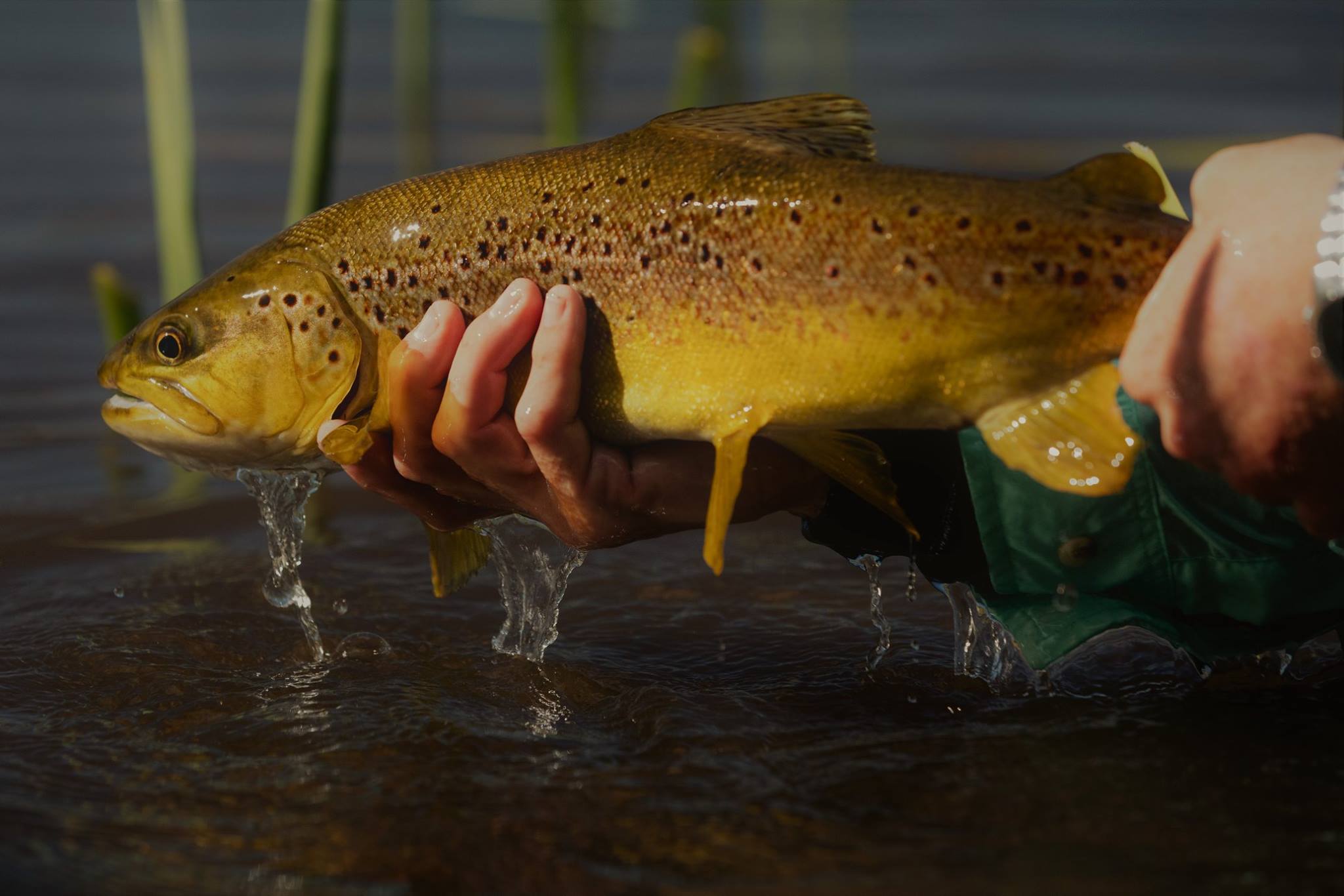
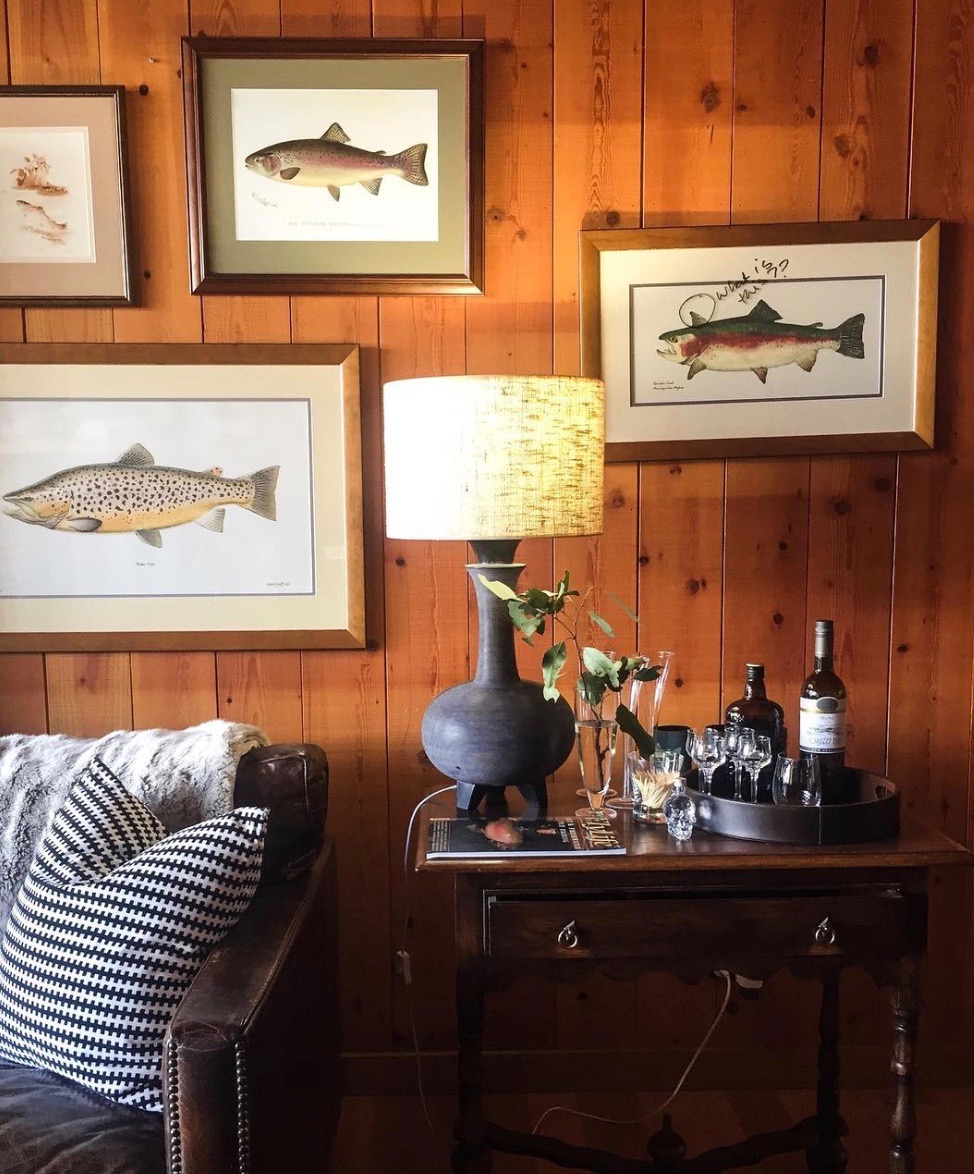
Thick bodied, with a large head and mouth. Colour runs from silver to olive brown, darker along the back, with dark spots on the back and sides. Most spots carry a pale halo, and below the mid line they are often red.
Browns have soft mouths. Run a loose drag and wear the fish down rather than rushing it, and you will land more of them.
Rainbow trout
Olive green to steely blue on top, silver white underneath, heavily spotted in black across the head, body and fins, often with a pink or red flash along the side. At spawning time that stripe turns deep crimson.
Even big rainbows can be dainty eaters. Strike firm and strike often; if you feel the faintest twitch, lift the rod.
Where you stay
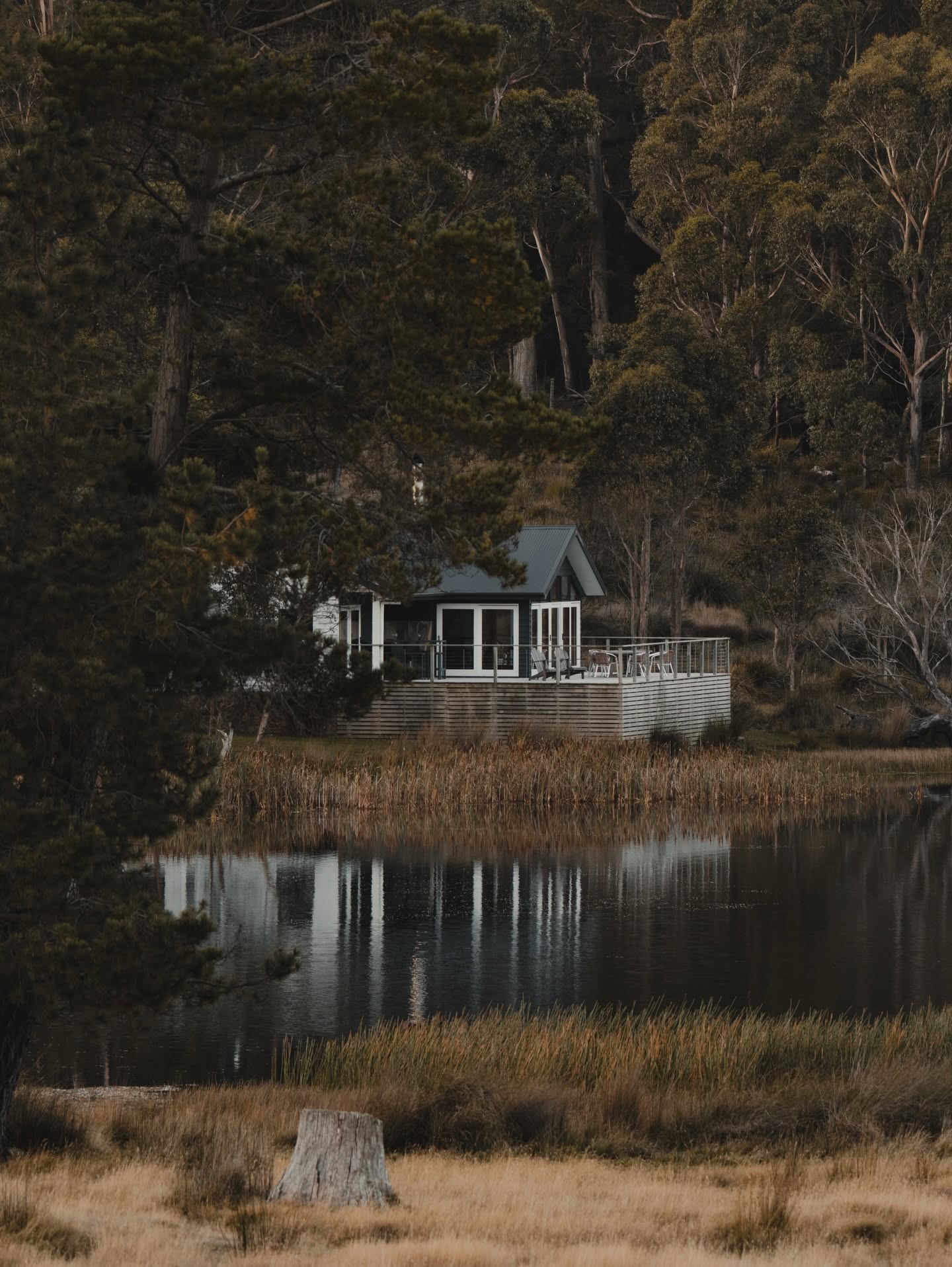
The Lake House
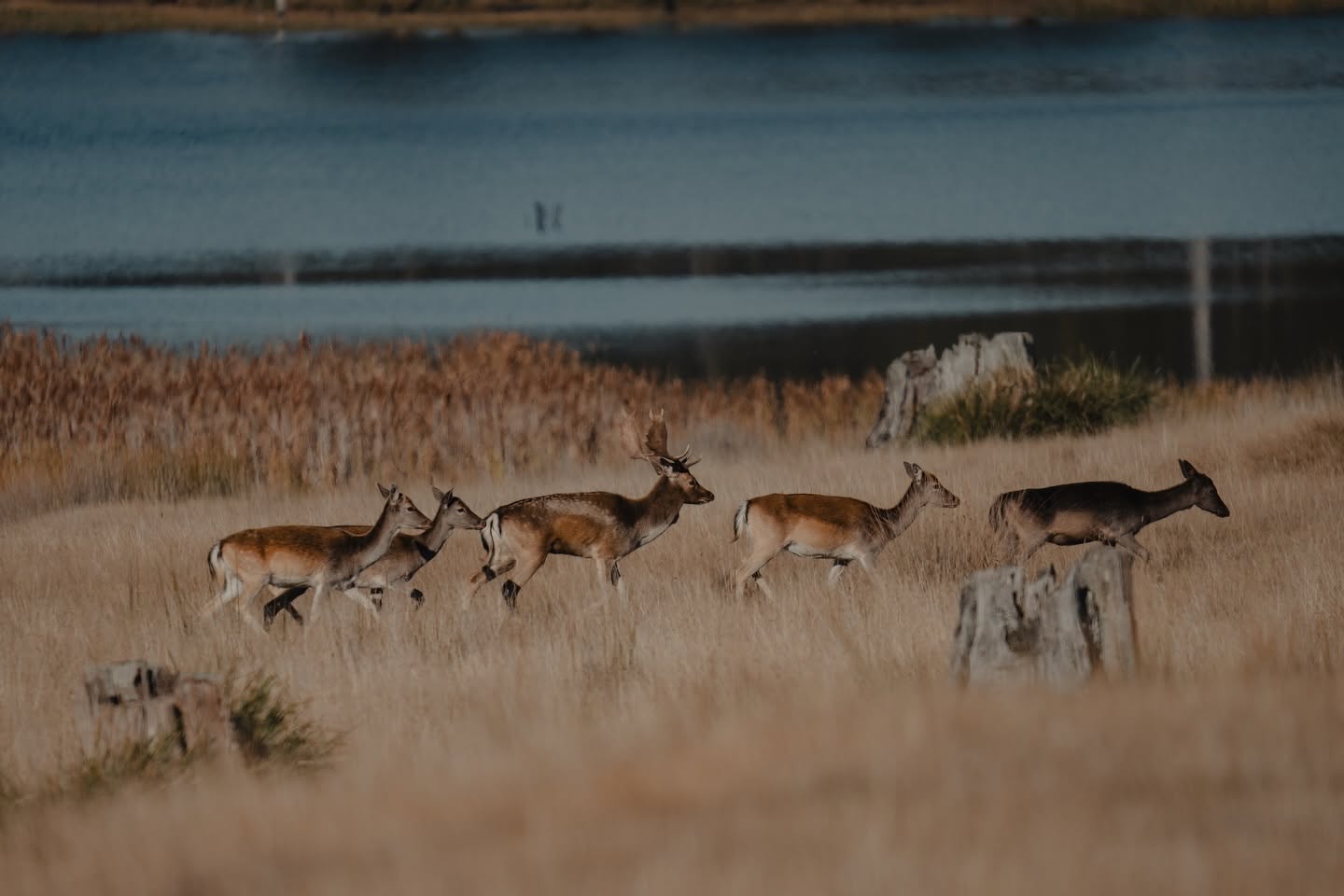
A deck perched over its own secluded lake, with rising trout, water birds and deer at the edge of the trees. Three spacious queen rooms, all with lake views and one with ensuite and dressing room, around a central living room with a large leather lounge and fire, a full kitchen and a private office. Wood fired pizza oven and barbecue on the deck, plus a secure two car garage and laundry.
3 bedroomsQueen rooms, lake views
The Hunter’s Cabin
Looks out over Long Marsh Lake. Four bedrooms give flexible sleeping for up to eight, with a full kitchen, dining and lounge, electric blankets, a wood fire and a barbecue deck. A good fit for a group.
Up to 8Four bedrooms
The Bush Cabins
Self contained cabins set in native forest above Lake Currawong. Two bedrooms with sleeping from queen beds to bunks, a full kitchen, dining and lounge, a wood fire, and a timber deck with outdoor seating and a barbecue.
2 bedroomsQueen beds to bunks
Guests can also use the BBQ Lodge on the shore of Lake Currawong. It seats up to 20 for dinners or small conferences and has a wood fire for cold nights. Every piece of timber in the building, tables and seating included, was grown and milled on the estate.
Where it is
Currawong Lakes1204 Long Marsh Rd
Lake Leake, Tasmania 7210
Australia
In the East Coast Highlands, surrounded by State Forest. We plan your flights into Tasmania and the drive in around your dates.
Photos
Tap any photo to see it full size.
Questions
Do I need my own fly fishing gear?
No. Fly gear can be hired on site, but you are welcome to bring your own.
I have never fly fished. Is this a good place to start?
Yes. There is an in house guide who can give tuition, and the lakes are a relaxed, private place to learn without pressure.
What is the weather like?
This is Tasmania, so expect four seasons in one day. Pack layers and a proper rain jacket, and be ready for cold evenings outside summer.
What else is there to do?
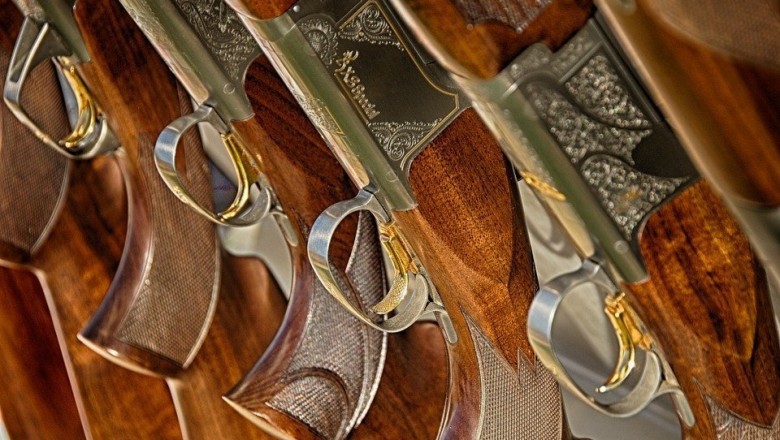
Clay target shooting if you want a break from the rod. If you have never tried it, this is a good chance to have a go. Otherwise it is a place to slow down and switch off.
Do I need a passport?
No, it is a domestic trip for Australian travellers. Tasmania does have strict biosecurity rules, so leave fruit and fresh produce at home.
Can we drink the tap water?
Yes. And while you are in Tasmania, the beer, gin and whisky are worth trying too.
How do I get there?
We plan your flights into Tasmania and the drive to the lakes around your dates, your budget and the fastest way home. Nothing makes us happier than hearing you walked back through your front door safe and sound.
Plan your trip to Currawong Lakes
A day, a weekend or a full week, fishing, shooting or both. Tell us who is coming, when you would like to go and what you want out of it, and we will put the whole trip together.
Or call Doug on +61 418 777 772, or email doug@fishingearth.com